

Knowing how to light artwork properly can make a major difference in how paintings, photographs, and other pieces look in your home or gallery. LED lighting is a popular choice for art lighting because it offers excellent control, high-quality color rendering, and significantly less radiant heat than traditional incandescent or halogen sources.
Configuring the best lighting for your art is a matter of choosing the right fixtures, lamps, light levels, and angles to showcase the piece while minimizing unnecessary light exposure.
Wall Washing
Wall washing lighting is a popular technique that allows designers to illuminate an entire wall surface with an even quantity of light. It creates a neutral context for the featured art. Because the wall is evenly lit, this method allows collectors to switch the artworks on display without changing the light.
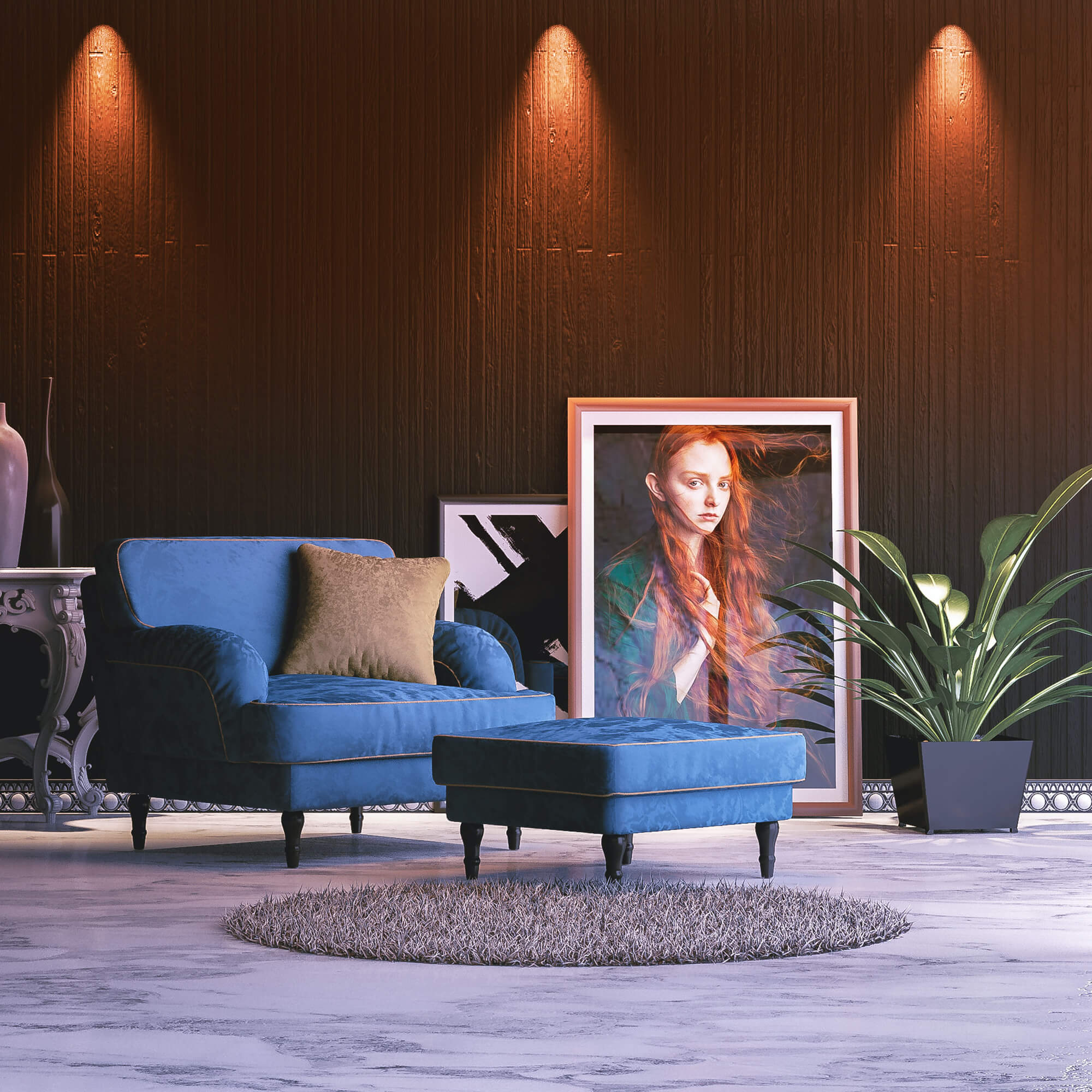
Recessed lights, surface-mounted lights, and track lights can all act as wall washers if specified with the proper lensing/optics. In order to get an even wash of light on a wall, special attention needs to be paid to the spacing between light sources and the distance offset from the wall. The optimal parameters for a given light source can be found on a manufacturer’s specification sheet.
Picture Lights
Perhaps the most traditional technique, picture lights are wall-mounted fixtures that light individual pieces of art. People usually use picture lights as an aesthetic choice since the fixtures add to the overall design of the space. Since they’re mounted close to artwork, picture lights lend a more intimate viewing experience. Whether you call them painting lights or picture lights, these dedicated fixtures remain a classic choice for highlighting individual artworks.

How to Light Artwork with Downlights
The downlight category includes recessed lights and ceiling-mounted spotlights, which are aimed to highlight a specific piece of art. When using downlights, the light source should be tilted at a 30º angle to avoid glare (for pieces behind glass) and accentuate the artwork. By using this rule, you’re able to pick up on just the right amount of texture and subtly enhance the shadows and highlights. The distance between the artwork and light source can also impact the level of dimension visible. The closer the fixture, the more shadowing is present.
To use the 30º angle rule, the fixture must be able to tilt. For recessed lights, LED gimbals can offer both rotation and tilt. Consider the Floating Gimbal LED Downlight from Lotus. These gimbal downlights allow for a very wide 90º angle tilt and 360º rotation to direct light. Their high CRI of 90+ means you’ll enjoy true color rendering in the area of installation. Ideal applications include sloped ceilings, highlighting artwork, cabinets, and recessed alcoves.

The Pivot Series of LED gimbal downlights from DALS is another excellent choice for wall washing and highlighting artwork. Like Lotus’ Floating Gimbal, this model has an even greater range of tilt than normal gimbals, allowing for a full 90º of gimbal tilt in any direction.
Track Lights
Museums frequently select LED track lighting systems for their flexibility. Because they’re typical in museums, we often see track lighting used in homes with large art collections and galleries. With track lights, collectors can frequently rotate the items on display since the lights can be adjusted easily. Moreover, track lights can be used to create either a spotlight or wall-washing effect depending on the optics and lenses chosen.
Tips for Conserving Artwork
Avoid Direct Sunlight
Taking measures to preserve artwork through proper lighting is incredibly important. Exposing art to heat and high levels of UV rays can fade or otherwise damage the piece over time. To prevent this, keep the art out of direct sunlight and consider installing UV-filtering window treatments.
Choose the Best Type of Light for Your Art
LED lighting is generally preferred for artwork because it produces less radiant heat and can provide excellent color rendering with minimal UV output. Halogen and incandescent sources operate at higher temperatures and may require additional consideration when used near sensitive artwork. Regardless of the light source, limiting unnecessary intensity and exposure time can help reduce long-term fading.
Need help? Our lighting experts are available weekdays — call or chat now.
Last Updated September 2026


Comments are closed.