

As LEDs continue to reign over incandescent and fluorescent options, it helps to know a handful of LED lighting terms so you can compare products properly and pick the right one for a project. Early LED lighting was mostly commercial, but the technology has shifted substantially into residential too. More consumers are making the switch, realizing that a larger upfront investment pays back over time.
Below are the terms worth knowing, roughly in the order you’ll meet them on a spec sheet.
LED
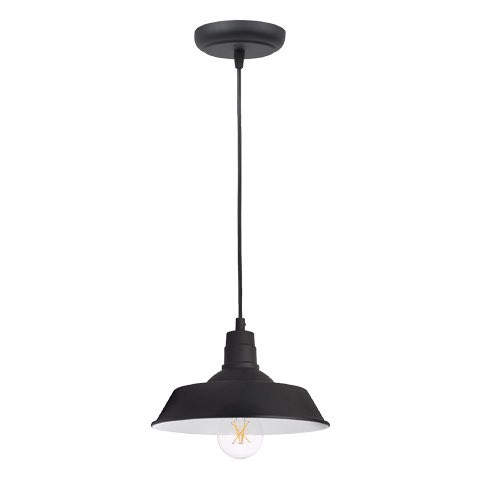
LED stands for Light Emitting Diode, a two lead semiconductor light source that emits light when electrical current passes through it. Energy is released in the form of photons.
Without getting too technical, what matters is that LEDs convert energy into light far more efficiently than incandescent or fluorescent lamps. Using less energy means they last longer and give off much less heat.
Integrated LED vs Replaceable Lamp
More fixtures now use integrated LEDs, built permanently into the fixture rather than taking a removable bulb.
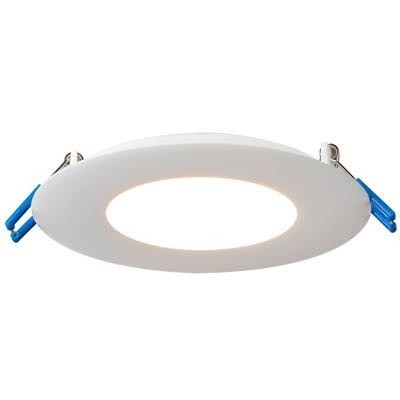
The advantage is form. Integrated LEDs let manufacturers build sleeker, slimmer fixtures, like these Super Slim LED Downlights from Lotus, available at PROLIGHTING. At half an inch thin they install where no conventional recessed fixture fits.
The tradeoff is serviceability. When an integrated fixture fails you replace the fixture, not a lamp. PRO tip: if you choose integrated, make sure a good warranty comes with it.
L70, LM-80 and TM-21
So how long do LEDs last? Most are quoted between 50,000 and 100,000 hours today, against 1,000 to 2,000 for a typical incandescent.
LEDs don’t burn out like traditional sources. They dim gradually instead, which is why the rating is expressed as a percentage rather than a failure point.
L70 is the time it takes a source to fall to 70% of its original output. When a spec sheet says “50,000 hours to L70,” it means the product is expected to still deliver at least 70% of its original light at 50,000 hours.
LM-80 is the IES standard test method for measuring lumen depreciation in LED packages. TM-21 is the companion method that takes LM-80 data and projects it forward into the L70 figure you see quoted. Manufacturers don’t run a fixture for 50,000 hours; they measure it under LM-80 and extrapolate under TM-21.
Correlated Color Temperature (CCT)
Most LED products offer a choice of white color temperature. CCT is measured in degrees Kelvin (K), on a scale running from about 1,000 to 10,000.
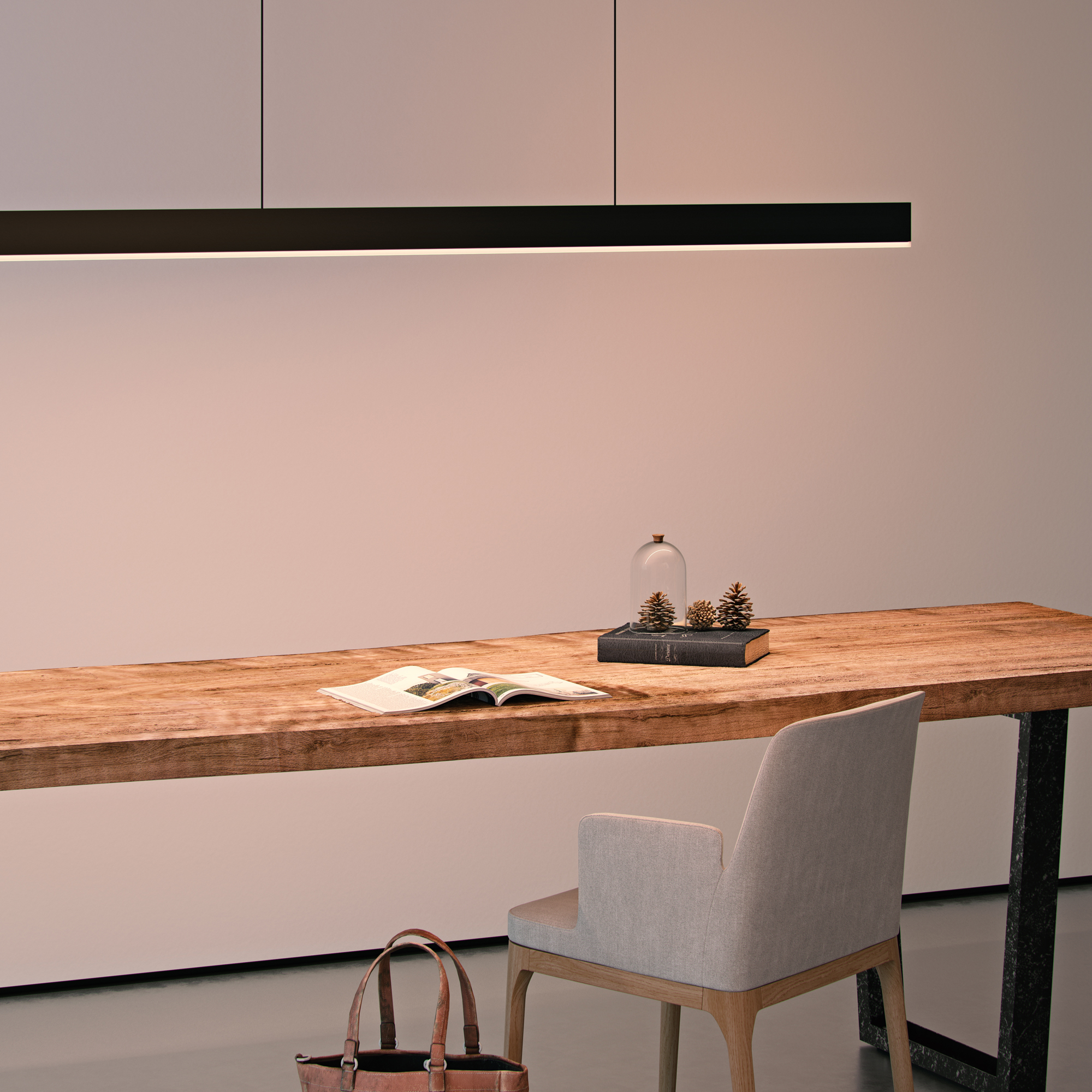
Lower numbers look warmer and more orange. Higher numbers look cooler and bluer. A warm white is usually 3000K or below, neutral white sits around 3500K to 4000K, and 5000K and above reads as cool white. Most residential and commercial lighting falls between 2700K and 5000K.
One common misconception worth clearing up: higher Kelvin doesn’t mean “closer to sunlight.” Direct daylight sits around 5000K to 6500K. Go higher than that and you move past daylight toward the blue of an overcast sky, which is why 7000K and up rarely looks natural indoors.
Consider color temperature carefully so the light matches the mood you want. For more, read Choosing the Right Color Temperature.
Selectable CCT
This one didn’t exist in most catalogs a few years ago and is now everywhere.
A selectable CCT product has a small switch on the fixture or driver that sets the color temperature at installation, typically across three to five options. One part number covers 2700K through 5000K.
For a contractor that means fewer SKUs on the van and no reorder when a customer decides the light reads too cool. For a facility manager it means one replacement product covering several rooms. It’s become the single most common feature across the products we sell.
Dim to Warm
Related but different. A dim to warm fixture shifts toward a warmer color as you dim it, usually travelling from around 3000K down to 1800K or 2200K.
That mimics how an incandescent behaves, which is what people unconsciously expect a dimmed light to do. Standard LEDs hold their color temperature as they dim, which can read as cold at low levels. Dim to warm suits living rooms, restaurants and hospitality.
Color Rendering Index (CRI)
CRI assesses how accurately a light source shows the color of objects.
Think of it this way: in a world of filters and apps, we’re used to seeing things altered from how they look in real life. CRI aims to remove the filter, from artwork on a wall to food on a counter. On a 0 to 100 scale, sources at 90+ are considered excellent, and the higher the number the more accurate colors look.
Two things worth knowing that the basic number hides. The CRI figure averages only eight muted test colors, and saturated red (R9) is reported separately. A fixture can show 90 CRI with a poor R9, which leaves skin tones and wood looking flat. TM-30 is the newer IES method that evaluates against 99 samples and reports both fidelity and saturation.

Lumens, Watts and Efficacy
Plenty of people still treat watts as a measure of brightness. They aren’t.
Lumens measure light output. The higher the lumens, the brighter the light appears. A watt is a unit of electrical power, measuring energy consumed. That’s what shows up on your utility bill.
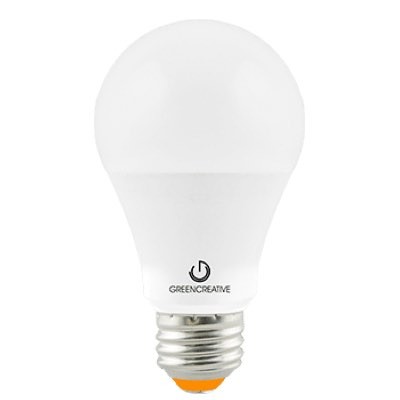
Efficacy is the two combined, expressed as lumens per watt (lm/W). It’s the number that actually tells you how efficient a product is. A Green Creative dimmable A19 using 9 watts to make 800 lumens works out to roughly 89 lm/W. The equivalent incandescent burns 60 watts for the same 800 lumens, about 13 lm/W.
One caveat worth knowing: efficacy and color quality trade against each other. Pushing a product from 80 CRI to 90 CRI typically costs 5% to 12% in lumens per watt. That’s usually worth paying in a kitchen and usually not in a warehouse.
Dimming: 0-10V, TRIAC and ELV
Lighting control keeps growing alongside demand for a connected home, and we recommend dimmers wherever possible. Good manufacturers use dimmable LEDs, but always check rather than assuming every fixture dims.
The three protocols you’ll meet most:
TRIAC (forward phase) trims the leading edge of each AC half cycle. It’s what almost every existing residential wall dimmer already is.
ELV (reverse phase, electronic low voltage) trims the trailing edge instead. Gentler on electronic drivers and usually smoother at the bottom of the range, which is why architectural fixtures often specify it.
0-10V uses a separate low voltage control wire rather than cutting the power waveform. It scales better across many fixtures, which is why commercial jobs use it.
Match the dimmer to the driver, not to the brand. If you’re chasing an existing problem, our guide to what causes LEDs to flicker covers the compatibility issues in detail.
Other Useful Terms

- Line voltage vs low voltage. Line voltage is the standard 120 volts found in outlets and junction boxes in the US and Canada, so line voltage fixtures are essentially plug and play. Low voltage typically runs at 12 or 24 volts and needs a transformer to step the line voltage down. The transformer is either built into the fixture or remote. More in our guide to low voltage lighting.
- Driver. The component that converts AC line power to the DC an LED needs and regulates current. Constant voltage drivers hold a fixed 12V or 24V and suit tape light. Constant current drivers hold a fixed current in milliamps and must be matched to the specific fixture.
- DLC Listed. Many utilities offer rebates when a commercial building converts to LED. DLC is the DesignLights Consortium list of qualified products those programs draw from. To claim a rebate the exact catalog number usually has to appear on it, and many programs require pre approval before work starts.
- IC Rated. IC stands for insulation contact. An IC rated recessed light, like the Lotus line, can sit in an insulated ceiling without risk of overheating. Worth knowing that IC rated is not the same as fire rated: IC rating is about avoiding a fire, fire rating is about containing one.
- Damp vs wet location. Damp rated covers protected spots like a covered porch ceiling. Wet rated is required anywhere rain or spray can reach, which includes most soffits, since wind driven rain gets under overhangs.
- Title 24 / JA8. California’s energy code. JA8 sets the requirements a residential fixture has to meet, including minimum CRI and low flicker operation. If you’re specifying into California, the JA8 listing covers it.
- Beam angle. How wide the light spreads, in degrees. Narrow beams around 15° to 25° highlight objects; wide beams of 90° and up give general coverage. The higher the mounting, the narrower the beam needs to be.
- SDCM. A measure of color consistency between fixtures. 3 step or tighter means two fixtures from the same box will match on the ceiling.
Where to Go Next
As more homes and businesses move to LED, knowing these LED lighting terms makes shopping considerably easier.
If you want to go deeper on any of them, we’ve written full guides to color temperature, low voltage lighting, LED flickering, recessed lighting spacing and choosing LED recessed lighting.
The PROLIGHTING team is always here to assist you if you have questions or need more information.
Updated September 2026


Comments are closed.