

Choosing the right light bulb color temperature can completely change how a room looks and feels. Our light bulb color chart makes it easy to compare warm white, soft white, bright white, and daylight LEDs from 2700K through 5000K so you can choose the best color temperature for every room in your home.
With so many LED lighting options available, understanding LED color temperature makes it easier to choose the right bulb or fixture for your space. Whether you want a warm, relaxing glow or brighter, cooler light for task areas, the best Kelvin temperature depends on the room, how the lighting will be used, and the atmosphere you want to create. At PROLIGHTING, we make it easier to compare LED bulbs and fixtures and find the right lighting for your application.
What is Color Temperature?
Most LED lighting products are offered in a variety of color temperatures in varying hues of white. Our light bulb color chart visually breaks down these temperatures, showing the range from warm (yellow) to cool (blue). Correlated color temperature, or ‘CCT’ in lighting jargon, is a term for how warm (yellow) or cool (blue) the color of light emitted from an LED bulb or fixture appears. It’s measured in units of Kelvin (K) – on a scale of 1,000 to 10,000 – and is easiest to explain in terms of how sunlight works.

The sun’s color temperature changes throughout the day. Midday readings might be around 6000K, or very bright bluish-white, while at sunset temperatures may dip below 3000K to a very warm amber light. Typically, Kelvin temperatures for residential lighting applications fall somewhere between 2500K and 5000K.
Light Bulb Color Temperature Chart
| Color Temperature | Light Appearance | Best For |
|---|---|---|
| 2200K–2700K | Very warm / amber | Bedrooms, decorative lighting, relaxing areas |
| 2700K–3000K | Warm white / soft white | Living rooms, bedrooms, dining rooms |
| 3000K–3500K | Warm-neutral white | Kitchens, bathrooms, general home lighting |
| 3500K–4000K | Neutral / bright white | Kitchens, bathrooms, offices |
| 4000K–5000K | Cool white | Garages, workshops, task lighting |
| 5000K+ | Daylight / blue-white | Commercial and high-task applications |
Use this light bulb color chart as a quick reference when choosing LED color temperature. Lower Kelvin values create a warmer, more relaxing appearance, while higher Kelvin values create a cooler, crisper appearance often preferred for tasks and workspaces.
Soft White vs Daylight: What’s the Difference?
One of the most common questions when choosing LED bulbs is: soft white vs daylight – which is better? The answer depends on the room and your personal preference.
Soft white LED bulbs (2700K-3000K) produce a warm, yellowish light similar to traditional incandescent bulbs. This warm white LED creates a cozy, inviting atmosphere perfect for living rooms, bedrooms, and dining rooms where you want to relax.
Daylight LED bulbs (5000K-6500K) produce a bright, bluish-white light that mimics natural daylight. This cool white LED is ideal for task-oriented spaces like home offices, garages, and work areas where you need to stay alert and focused.
For most homes, we recommend staying between 2700K-4000K. Pure daylight bulbs (5000K+) can feel too harsh in residential spaces, though they work well in basements, workshops, and utility areas.
Using Color Temperature at Home
Now let’s apply what we’ve learned. Our LED color temperature chart provides a quick reference for understanding how warm (3000K or lower) and cool (4000K or above) lighting affects different spaces in your home.

Color temperatures of 4000K and above are common in commercial and task-oriented spaces because they create a cooler, crisper appearance. Keep in mind that color temperature does not determine brightness—brightness is measured in lumens. In homes, 4000K can work well in kitchens, bathrooms, offices, basements, and workshops where a clean, task-focused appearance is preferred.
Choosing the best LED color temperature depends on both the room and how the space will be used. Warmer color temperatures generally create a softer, more relaxing atmosphere, while cooler temperatures provide greater visual clarity for tasks and workspaces.
Natural light, wall colors, flooring, furniture, and other finishes can also affect how a particular Kelvin temperature appears. Because of this, two rooms using the same 3000K lighting may look slightly different depending on their surroundings.

How to Choose the Right Color Temperature for Your Home
Before choosing a light bulb, refer to our light bulb color chart and consider how different Kelvin temperatures will complement your walls, flooring, ceiling, and furnishings. If your home mostly consists of cool colors like blacks, grays, blues, greens, and crisp whites, a neutral-to-cool LED color temperature such as 3500K or 4000K might be the best choice for complementing your décor.
On the other hand, if your home is full of natural materials like hardwood floors, tongue and groove ceilings, wood cabinets and furniture, woven rugs and fabrics in browns, tans, reds, oranges, warm white LED bulbs (2700K-3000K) will likely be your best bet.
Another thing to consider is the style of your home. Certain spaces in traditional and transitional homes typically look best under 2700K LED warm white light, because it gives off the glow similar to candlelight, gas light, and old fashioned incandescent lights, reminiscent of classic homes.

The clean lines and minimalist design of modern homes might look best with LEDs on the cooler side of the scale. But also keep in mind that for certain areas, like the bedroom, warmer temperatures may still be the best choice to allow for relaxation and sleep.
Best Color Temperature for Each Room
BEDROOM: Bedrooms are considered the most intimate space in your home. We recommend keeping the lights low and warm for a soothing atmosphere that allows you to relax and rest. Best color temperature for bedrooms: 2700-3000K

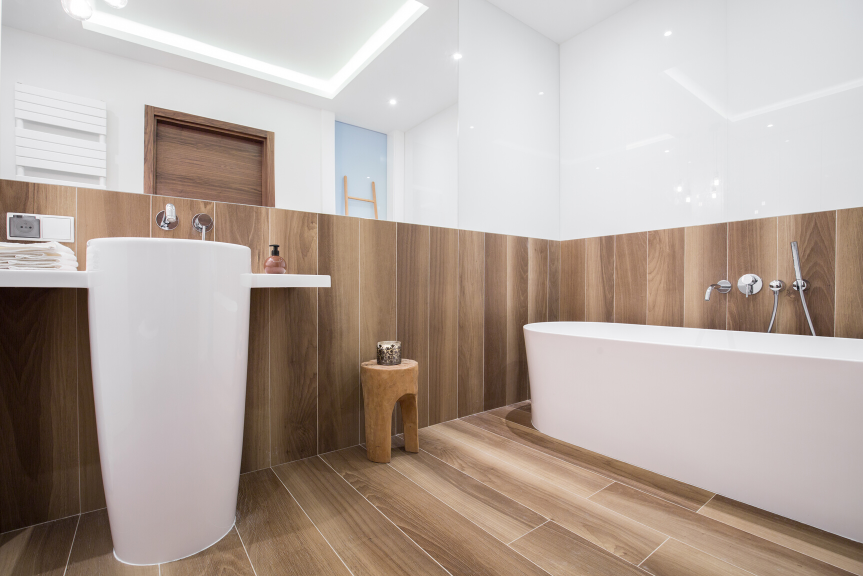
BATHROOM: We like bathroom spaces to be cooler and brighter so they remain functional for routines like applying makeup and shaving. A clean, fresh setting can easily transform to a more soothing environment with the use of a dimmer. Best color temperature for bathrooms: 3000-4000K
LIVING ROOM / DEN: Create an inviting space you’ll want to relax in, that’s also perfect for entertaining. Using a dimmer will also help set the right atmosphere for TV watching and movie nights. Best color temperature for Living rooms: 2700-3000K
DINING ROOM: You’ll want lighting that’s a balance between being inviting, but also bright enough so you can see what you’re eating. We recommend installing a dimmer to help adjust to the perfect mood. Best color temperature for dining rooms: 2700K – 3000K
KITCHEN: Bright light in the kitchen is ideal for prepping food and reading recipes, but since kitchens are versatile, the best color temperature depends on your décor and other lighting in the space. A versatile 3000K warm white is a good starting point for many kitchens, while 3500K–4000K provides a crisper appearance for task-oriented lighting. Best color temperature for kitchens: 3000K–4000K.

OFFICE / WORKSPACE / GARAGE: You’ll need bright, functional lighting in order to be productive and focused. 4000K LED bulbs might be a good idea in an office or workspace that you use primarily during the daytime. However, if your space receives enough daylight from windows, you may opt to go with something warmer for the evening. Suggested color temperature: 3000-5000K
Dimming, Tunable White and Warm-Dim Lighting
Standard dimming changes light output but does not necessarily change an LED’s color temperature. Tunable-white fixtures allow you to adjust the color temperature itself, while warm-dim LEDs intentionally shift to a warmer Kelvin temperature as they are dimmed.

Ideally, our lighting would change over the course of the day, just like the sun. We can try to emulate this process with indoor LED fixtures that have ‘tunable’ technology. These products let you toggle between a range of color temperatures and customize the light to your desired look.
At PROLIGHTING, we always recommend using dimmers whenever possible. The ability to dim can instantly transform a space and give you more functionality. Dimming also saves energy and extends the life of your LED bulbs and fixtures. In addition to dimmable bulbs and fixtures, many manufacturers now make ‘warm dim’ LEDs that go as low as 1600K when dimmed, giving off a more traditional incandescent glow.

Still need help determining the right temperature setting for your space? Contact our team of lighting specialists with any product, design, or pricing questions.
Updated September 2026



Comments are closed.