
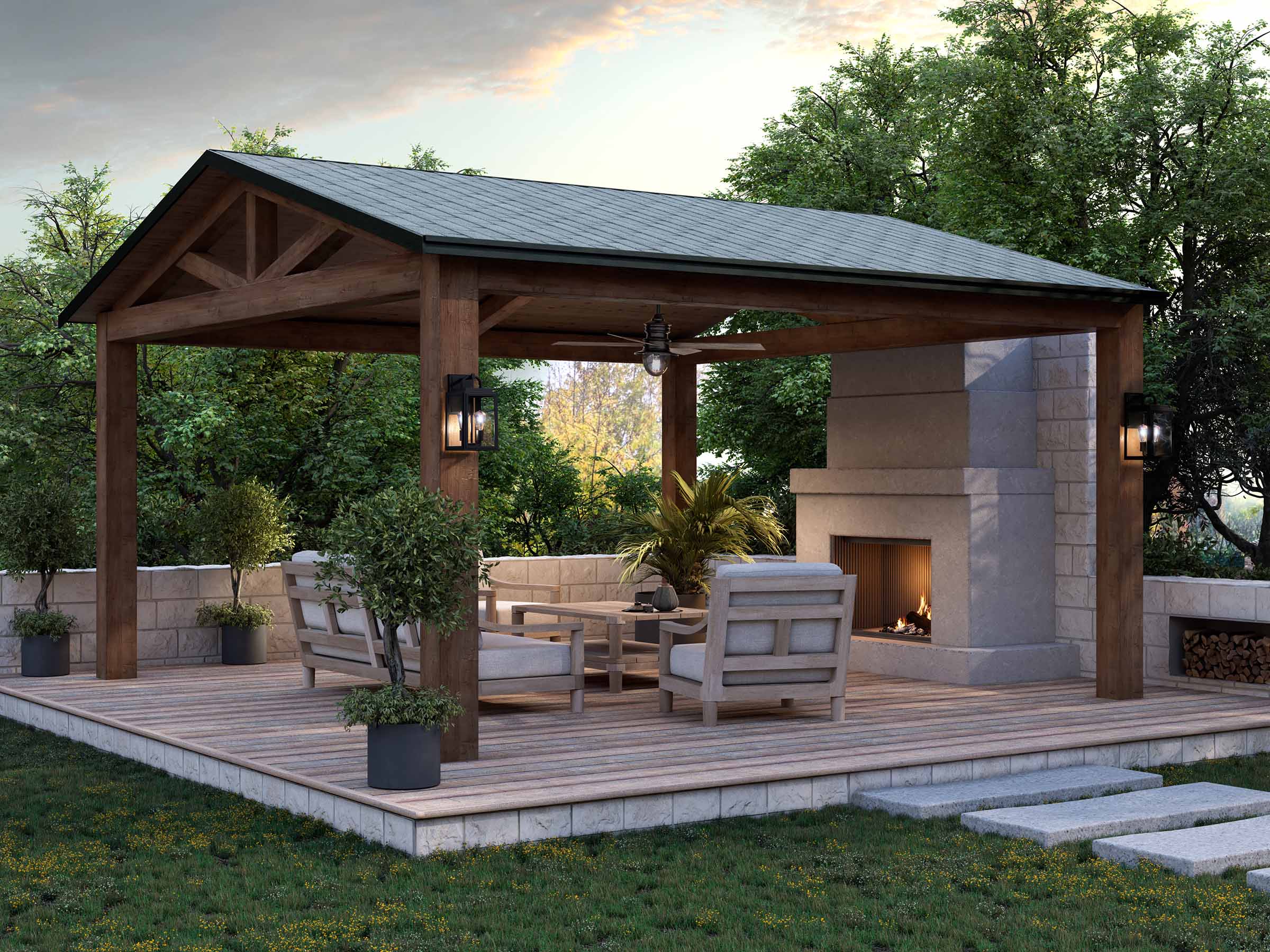
Good outdoor lighting ideas do two jobs at once. They make a yard usable after dark and they make it look like somebody planned it. The gap between a well lit garden and a few floodlights pointed at a lawn is mostly decisions, not budget.
Below are six outdoor lighting ideas that work in most yards, plus the technical part nobody explains until after you’ve bought the wrong transformer. Everything here is available at PROLIGHTING.
1. String Lights: The Easiest of the Outdoor Lighting Ideas
String lights are a timeless favorite for outdoor decor. Their soft glow adds warmth to any setting, and commercial grade versions hold up to weather far better than the seasonal stuff sold in big box stores. A few ways to use them:

- Wrap Them Around Trees: Drape lights around trunks and branches to create a canopy effect overhead rather than glare at eye level.
- Create a Cozy Patio: Hang them above a dining area or seating space. Run them at least 8 feet up so nobody walks into a socket, and use a guide wire on spans over 20 feet so the cord doesn’t sag.
- Line Pathways: Use string lights to outline walkways or garden paths, guiding guests with a gentle glow.
2. Highlight Your Landscape
Among outdoor lighting ideas, landscape lighting gives you the most control over how a yard reads at night. Two fixture types do most of the work:
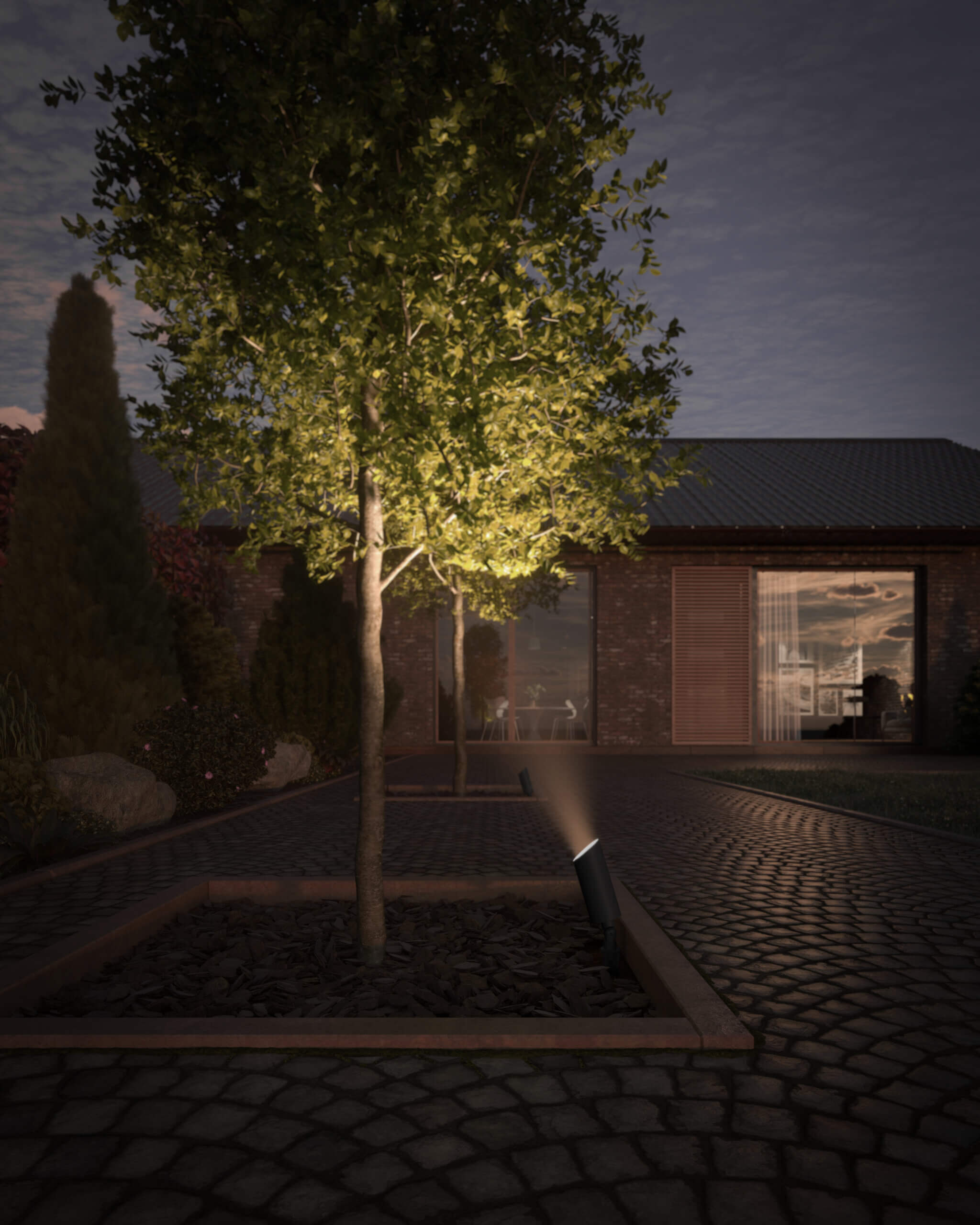
- Spotlights: Install spotlights to graze specimen trees, textured walls or architectural features. Aim from the side rather than straight on, since a light directly under a tree flattens it. Narrow beams (15° to 25°) suit tall trees; wider spreads suit shrub beds and facades.
- In-Ground Lights: For a cleaner daytime look, use in-ground well lights to uplight trees or columns. The fixture disappears into the grade, which matters when the yard is as much a daytime space as a nighttime one.
3. Lanterns and Outdoor Pendants
Lanterns give you a fixture that looks intentional in daylight, which matters more than people expect. Three ways to use them:
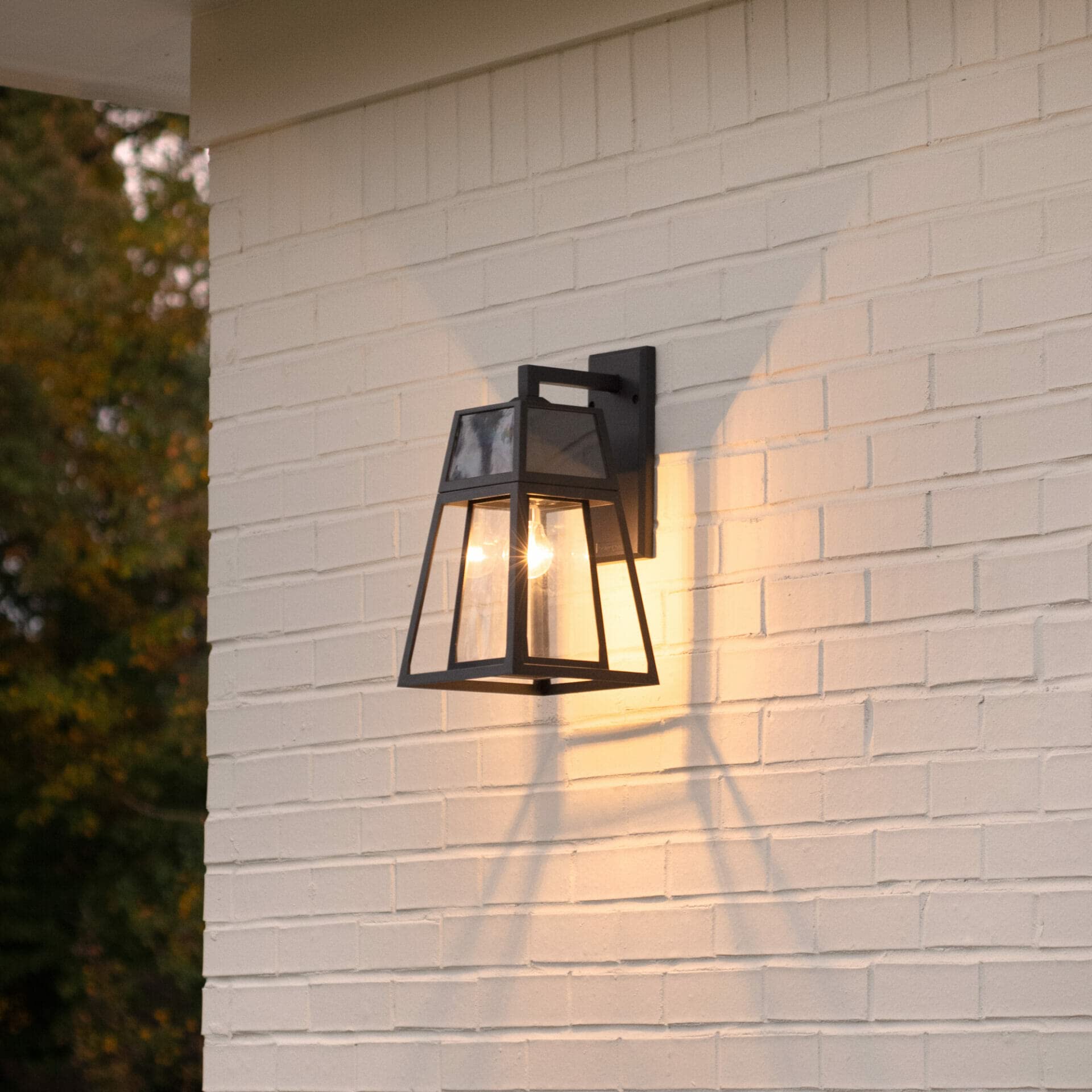
- Lantern Wall Lights: Decorative wall lanterns flanking a door or garage are both functional and architectural. Look for metal, glass or weather resistant resin built to handle the elements.
- Hanging Lanterns: Available in designs from rustic to contemporary, outdoor pendant lights hang from porches, patios or pergolas. Check the mounting height and the damp or wet rating before you commit, since a covered porch and an open pergola have different requirements.
- Lantern Pathways: Line walkways with path lanterns to create a welcoming route to the door. Stagger them rather than lining them up like runway markers, and space them so pools of light overlap slightly.
4. Solar Powered Outdoor Lighting Ideas
Solar powered LED lights harness the sun during the day and light up at night without touching your electricity bill or requiring a trench. Two caveats: output is lower than wired, and performance depends entirely on how much direct sun the panel gets.
- Solar Path Lights: Ideal for walkways and garden beds. No wiring, easy to reposition as plantings fill in.
- Solar Sconce Lights: Mount where the panel gets several hours of unobstructed sun. Automatic dusk to dawn sensors handle the switching.
5. Fire Pit and Hardscape Lighting
Of all the outdoor lighting ideas people try around a fire pit, the mistake is lighting the pit itself. A fire pit throws warm light at knee height and almost none where people need it. Lighting the area around it is what makes the space work:
- Surrounding Lighting: Low level lighting around the seating area keeps the space usable without washing out the fire itself. Keep the output low and the source shielded.
- Built-In Lights: Hardscape and step lights tucked into seating walls, retaining walls or stair risers light the surface people are walking on. Nobody sees the fixture, they just stop tripping.
6. Safety and Functionality
The outdoor lighting ideas above cover appearance. These cover everything else.
A few practical additions earn their place:
- Motion Sensor Lights: Near entryways, garages and side gates, where you want light on arrival rather than all night.
- Dimmable Lights: Dimmable outdoor lighting lets one installation serve a party and a quiet evening. Confirm the fixture and the dimmer are compatible, since outdoor LED drivers are pickier than indoor ones.
- Timers and photocells: Dusk to dawn control means the lights come on when they should without anyone thinking about it.
7. Before You Buy: Voltage, Transformers and Ratings
This is the part that decides whether a design works, and it’s where most outdoor lighting ideas fall apart in practice.
Low voltage or line voltage. Most residential landscape lighting runs at 12V through a transformer, governed by NEC Article 411. It’s safer to work with, the cable can be direct buried at shallow depth, and you don’t need a licensed electrician for the low voltage side. Line voltage fixtures at 120V make sense for wall lanterns, floods and anything on the house itself.
Size the transformer with the 80% rule. Add up the wattage of every fixture on the system, then divide by 0.8. A 200W load wants a 250W transformer minimum. Running a transformer near its rated capacity makes it run hot and leaves you no room to add a fixture next season.
Plan for voltage drop. This is the most common reason a landscape install disappoints. Voltage falls off across a wire run, so the last fixture on a long line gets less than the first. Keep every fixture within 10% of the transformer’s output, which on a 12V system means nothing below 10.8V. A fixture at 10.5V reads visibly dimmer and can shift color on LEDs.
Three ways to manage it: use 12/2 direct burial cable as your default rather than 14/2, step up to 10 AWG on runs past about 150 feet, or use a multi-tap transformer and feed the long run off the 13V or 14V tap. Measure voltage at the last fixture before you bury any cable. It’s a five minute check that prevents digging the run back up.
Get the location rating right. Damp location covers protected spots like a covered porch ceiling. Wet location is required anywhere rain reaches, which includes most soffits, since wind driven rain gets under overhangs. In-ground and well lights need to handle standing water and sprinkler spray.
Two code points: the transformer needs a GFCI protected outlet, and anything within the vicinity of a pool or spa falls under NEC Article 680, which has its own rules. Local amendments apply, so check with your inspector on anything near water.
Outdoor Lighting Ideas FAQs
What size transformer do I need for landscape lighting?
Total the wattage of all fixtures and divide by 0.8, then round up to the next available size. 200W of fixtures needs at least a 250W transformer. Residential systems commonly land between 150W and 600W.
How far can low voltage landscape lighting wire run?
With 12 AWG direct burial cable, runs up to about 100 feet are straightforward and up to 200 feet is workable depending on load. Past roughly 150 feet, step up to 10 AWG, split into multiple runs, or add a second transformer closer to the far fixtures.
Do outdoor lights need to be wet location rated?
Anywhere rain can reach, yes. Damp rating only covers protected locations. Soffits and covered patios often see wind driven rain, so wet rated is the safer default outdoors.
Are solar lights bright enough to replace wired fixtures?
For path lighting and accent work, often yes. For uplighting a mature tree or lighting a driveway, wired fixtures deliver output and consistency solar can’t match, especially in shaded yards or through winter.
Can outdoor LED lights be dimmed?
Many can, but not all, and it depends on the driver rather than the brand. Check the fixture’s dimmer compatibility list before buying a dimmer.
Putting It Together
Working through outdoor lighting ideas in the right order matters. Start with the fixtures that do a job: path lights where people walk, wall lanterns at the doors, step lights on any change in grade. Then add the ones that create the effect, like uplighting a specimen tree or string lights over a seating area. Layering in that order gets you a yard that works and looks considered, rather than one with a lot of light and no shape.
Browse the full range of outdoor lighting at PROLIGHTING. Need help sizing a transformer or working out voltage drop on a long run? Our PROs are available weekdays. Call or chat and we’ll work through the layout with you.
Updated September 2026



Comments are closed.