Over the years, the use of LED strip as a customized lighting solution has become increasingly popular — even more so since the pandemic when homeowners began to shift their focus to projects they can tackle themselves. Do-it-yourself LED tape and strip lights can be found everywhere, and at every price point. One brand stands out among the many and that’s the innovative, award-winning TRULUX™ line from American Lighting. Their newest product on the market? High Output Dotless COB LED Tape Light Strips and Kits, available now at PROLIGHTING.
Discover TheLatest Articles
When considering an outdoor lighting overhaul, your design will likely include several different types of fixtures. This ‘layered lighting’ look is usually achieved using a combination of flood or area lights, path lights, up lights, downlights, and possibly even spotlights – all of which can enhance the curb appeal of your home or business, highlight architectural features, and increase safety and security. LED flood lights are among the most popular outdoor lighting options in residential and commercial applications; however, with so many options for light distribution, it can be a bit confusing to know the difference and determine which is best for your lighting needs. Our aim is to help you understand how beam spread works so you can be confident you’re choosing the right outdoor light for your project. Beam spread, or beam angle, measures the spread of light (the width of the beam) from a reflected light source.…
Discover TheLatest Articles
If you glance around your home, you’ll notice that many light fixtures are connected directly to the line voltage of your electrical system. Line voltage (also known as high voltage, or what is commonly referred to as household current), is the standard voltage -120 volts- that’s found in outlets and junction boxes here in the U.S. Line voltage fixtures are used for many types of traditional lighting including ceiling lighting and sconces. Low voltage LED lighting, which we’ll be discussing throughout this post, uses less than 50 (typically 12 or 24) volts of power. Low voltage lighting got its start in American residential settings in the 1950s. Originally developed to facilitate landscape lighting, low voltage lighting soon made its way indoors and is now very common for lighting applications like recessed lighting, track lighting, under cabinet lighting, strip and tape lighting, and more. So what’s the deal with low voltage…
Discover TheLatest Articles
What is Color Rendering Index (CRI)? As LED technology continues to advance, lighting manufacturers are beginning to offer more products with a high color rendering index, or CRI. Just like color temperature (CCT) can significantly impact how a room will look and feel, CRI affects how good the visual output of an LED lighting product will be. In fact, the two go hand in hand when you’re trying to choose the right lighting for your application. So what is CRI? In short, CRI is the measurement of light in relation to how it affects the appearance of color. It is an assessment of how the light source shows object colors ‘naturally’ when compared to a familiar basis of reference, such as daylight. The CRI scale started gaining popularity when LED lighting became more prevalent in homes. It’s measured as a number between 0 and 100. In general, LED bulbs and fixtures…
Discover TheLatest Articles
When it comes to lighting design, closets are one of the most overlooked areas in the home. Regardless of the size of your closet, proper closet lighting is important not only for aesthetic reasons, but because these areas also have their own set of safety requirements. Whether you’re building a brand new closet space or updating an existing one, these tips should help ease the stress of shopping for lighting. Note Important Safety Codes The National Electric Code (NEC), which is published every three years by the National Fire Protection Association, sets the rules and guidelines that apply to building regulations in most commercial and residential spaces, including closets and other storage areas. In the 2008 edition of the code, LED fixtures were allowed for the first time. Since then, modern homes have slowly integrated over to LED technology. However, people still utilize a pull chain and bare bulb method…
Discover TheLatest Articles
Why Under Cabinet Lighting? Under cabinet lighting is one of the most useful and convenient lighting applications on the market today. As the name suggests, under cabinet lighting refers to light fixtures that are installed most commonly underneath upper wall kitchen cabinets, illuminating the space directly below. These hidden fixtures are able to blend in seamlessly without looking obtrusive or clashing with existing decor. They’re used predominantly in kitchen areas where additional light is useful for reading recipes and preparing food. An under cabinet system will not only improve the brightness and overall look and feel of your space; it’s also one of the easiest ways to increase the resale value of your home. Modern LED under cabinet lights have revolutionized kitchen lighting, offering superior energy efficiency and longer lifespans compared to outdated fluorescent or halogen systems. Whether you choose hardwired under cabinet lighting for a permanent installation or plug in…
Discover TheLatest Articles
As LEDs continue to reign supreme over incandescent and fluorescent options, it’s important to familiarize yourself with certain LED terms so that you can understand the advantages and select the best LED products for your project. While early LED lighting was primarily used in commercial settings, advancements in technology has caused it to shift substantially to residential applications as well. More and more consumers are making the switch over to LEDs – realizing that while it may require a larger initial investment, the long-term benefits outweigh the cost. LED, which stands for “Light Emitting Diode,” is a two-lead semiconductor light source that emits light when an electrical current is passed through it. During this engineering process, energy is released in the form of photons. But let’s not get too technical – what you really need to know is that LEDs are more efficient at turning energy into light compared…
Discover TheLatest Articles
What is 0-10V Dimming? 0-10V dimming is a lighting control method that – on direct current voltage (DC) between 0 and 10 volts – can produce light at varying intensity levels. 0-10V dimming is the simplest control system for lighting, providing smooth operation and dimming down to 10%, 1%, and even 0.1% light level. At 10 volts, the light will go to maximum power. At 0 volts, the light will dim to its minimum light level, although sometimes a switch is required to turn the lights off completely. This easy lighting control system connects to your LED fixtures to provide flexible lighting solutions and ambiance. Dimming LED lights using a 0-10V dimmer allows you to create lighting to suit a mood or activity through a reliable technology. For example, designing an elevated atmosphere for areas like bar and restaurant seating. Where to Use a 0-10V Dimmer? 0-10V dimming was originally…
Discover TheLatest Articles
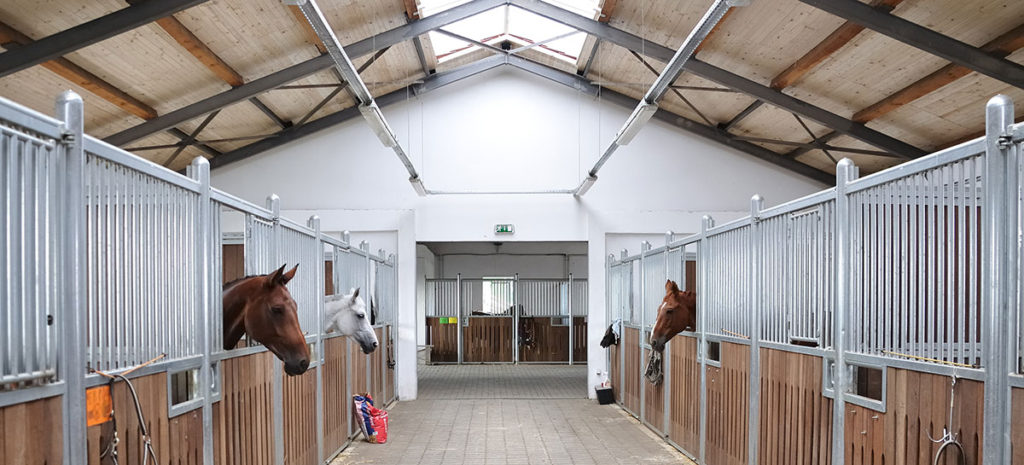
How Lighting Affects Reproduction Horses depend on a natural cycle of sunlight to reproduce. During seasonal daylight changes and colder weather, reproductive cycles in the mare grow less consistent, ultimately moving to a period of anestrus which is defined as a lack of estrus or sexual receptivity and fertility in female mammals. Stallions also undergo a low amount of sperm in response to shorter days and less light. Reproduction in both stallions and mares relaxes in the arctic regions through this season of the year and mares will not continue constant estrus (sexual receptivity) periods until around April. Artificial equine lighting can be used to spur a female horse to estrous quicker than normal. Mares need roughly 15 hours of constant light and 8 hours of darkness in order to maintain reproductive abilities. When Light enters the animal’s eye it suppresses the release of melatonin thus enabling the continuation of…
Discover TheLatest Articles
Landscaping is a key part of a building’s appearance. A well-kept appearance is a great first impression for prospective buyers, clients and employees alike. During daylight hours everyone gets the full effect, but, once the sun starts to set all of the details and aspects of the property that made it so appealing disappear into darkness and leave it looking like any other building. LED landscape lighting fixtures can transform the look of your yard at night. When done right landscape lighting will highlight your shrubs or hedges, light your walkway, and in some cases even accentuate certain architectural qualities. There are several different styles of light that are popular in landscape settings. Depending on how big you are planning to go for your landscape, you may end up needing more than one type, if not all of them. Types of Fixtures Garden – Garden lights are most often styled…